
What Is Digital Marketing and Why Is It Important for Businesses in the Philippines?
Discover how digital marketing helps businesses in the Philippines reach more customers, build brand awareness, and drive growth.

Your customers are online. Is your business ready to meet them there?
In a world where customers spend more time online, having a strong digital presence is no longer optional—it’s essential. But what exactly is digital marketing, and how can it help businesses reach the right audience, build trust, and drive growth?
1. What Is Digital Marketing?
Digital marketing refers to using digital channels, platforms, and technologies to promote products, services, or brands and connect with customers.
Unlike traditional marketing, which relies on channels such as television, radio, print, and billboards, digital marketing allows businesses to reach people through online platforms where they spend much of their time.
Common digital marketing channels include:
- Search engines
- Social media
- Websites and blogs
- Online advertisements
- Video platforms
- Mobile applications
2. Why Is Digital Marketing Important?

Reach the right people, build lasting trust, and turn online connections into measurable growth with digital marketing that puts your business where your customers are.
Digital marketing has become an important part of modern business because customers increasingly use the internet to discover, research, compare, and purchase products and services.
Here are some of the key reasons why businesses use digital marketing:
1. Reach the Right Audience
Digital marketing allows businesses to target specific audiences based on factors such as age, location, interests, online behavior, and search activity.
This makes it easier to deliver relevant messages to people who are more likely to be interested in a product or service.
2. Build Brand Awareness
A consistent online presence helps people become familiar with a business and its offerings.
Through social media, websites, videos, blogs, and online advertising, businesses can introduce their brand to potential customers and remain visible throughout the customer journey.
3. Build Trust and Credibility
Customers often research a business online before deciding.
A professional website, useful content, active social media presence, customer reviews, and informative posts can help establish credibility and give customers greater confidence in a brand.
4. Generate Leads and Sales
Digital marketing can help businesses attract potential customers and guide them toward taking action.
Depending on the business, this action could include:
- Visiting a website
- Sending an inquiry
- Signing up for an account
- Booking a consultation
- Requesting a quotation
- Making a purchase
5. Measure Marketing Performance
One major advantage of digital marketing is the ability to track results.
Businesses can monitor metrics such as:
- Website traffic
- ReachEngagement
- Clicks
- Leads
- Conversions
- Cost per lead
- Return on investment
These insights can help businesses understand what works and make better marketing decisions.
3. What Are the Different Types of Digital Marketing?
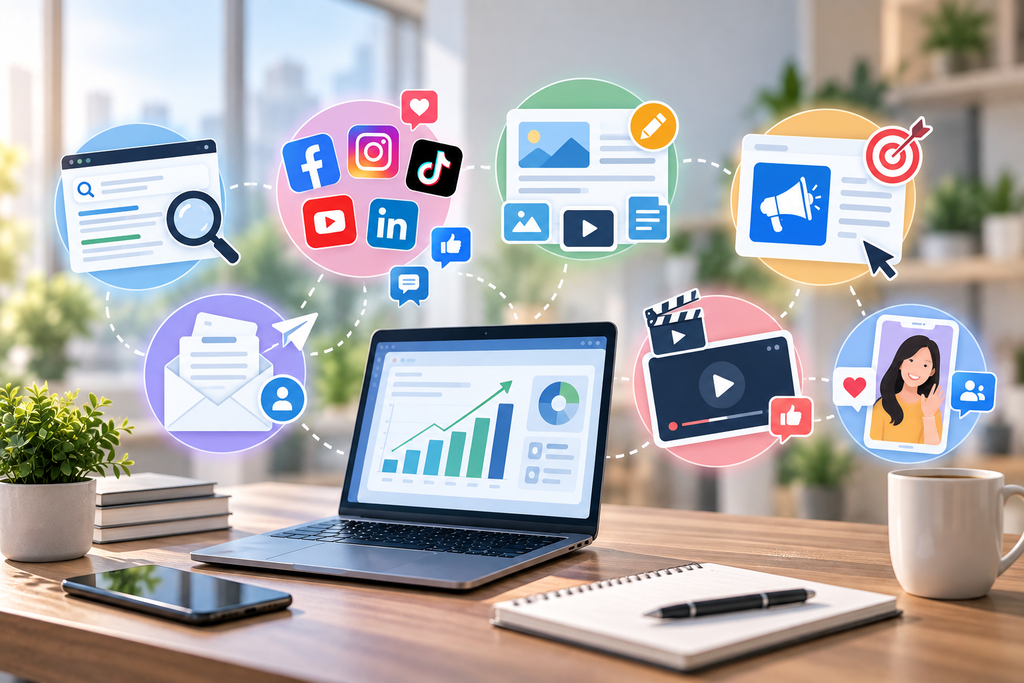
From search engines to social media, content, and creators, digital marketing gives businesses the tools to reach the right audience, spark engagement, and turn attention into meaningful results.
Digital marketing includes several strategies, each serving a different purpose.
1. Search Engine Optimization (SEO)
SEO involves improving a website and its content so it appears more prominently in search engine results.
For example, a business can create helpful articles that answer questions customers are searching for online.
2. Social Media Marketing
Social media marketing uses platforms such as Facebook, Instagram, TikTok, LinkedIn, and YouTube to connect with audiences.
Businesses can use social media to:
- Share content
- Promote products and services
- Build communities
- Engage with customers
- Increase brand awareness
3. Content Marketing
Content marketing focuses on creating useful and relevant content that provides value to an audience.
Examples include:
- Blog articles
- Videos
- Infographics
- Guides
- Tutorials
- Social media posts
- Educational content
4. Search Engine Marketing and Paid Advertising
Businesses can use paid online advertising to reach specific audiences and drive traffic to their websites or landing pages.
Examples include search ads, display ads, social media ads, and video advertisements.
5. Email Marketing
Email marketing allows businesses to communicate directly with customers and prospects.
It can be used for:
- Promotions
- Newsletters
- Product updates
- Educational content
- Customer follow-ups
- Special offers
6. Video Marketing
Video is an increasingly popular way for businesses to communicate with audiences.
Businesses can use short-form and long-form videos to explain products, answer questions, tell stories, and showcase their brand.
7. Influencer and Creator Marketing
Businesses can also collaborate with influencers and content creators who have established audiences.
When the partnership is relevant and authentic, creators can help introduce a brand to new potential customers.
4. How Does Digital Marketing Help Businesses?

Guide customers from discovery to loyalty by using digital marketing to attract attention, build trust, inspire action, and nurture lasting relationships.
A well-planned digital marketing strategy can support different stages of the customer journey.
Awareness
Customers first discover a business through search engines, social media, advertisements, videos, or other online content.
Consideration
After discovering a brand, customers may visit its website, read articles, compare options, check reviews, or follow its social media accounts.
Conversion
Once customers are ready to act, digital channels can make it easier to purchase, book, inquire, register, or contact the business.
Retention
Digital marketing doesn’t stop after a purchase. Businesses can continue communicating with customers through email, social media, helpful content, and personalized offers.
5. What Makes a Digital Marketing Strategy Effective?
Successful digital marketing is more than simply posting on social media or running advertisements.
Businesses should consider:
- Knowing their target audience
- Setting clear marketing goals
- Creating useful and relevant content
- Choosing the right digital channels
- Optimizing content for search engines
- Monitoring campaign performance
- Understanding customer behavior
- Continuously testing and improving strategies
6. Why Should Businesses Start Digital Marketing?

No matter your business size, digital marketing helps you get seen, earn trust, connect with customers, and turn online opportunities into measurable growth.
Whether a business is small, growing, or established, digital marketing can help you reach customers where they already spend their time.
It can help businesses become more visible, communicate their value, build relationships, and create measurable growth opportunities.
The Bottom Line
Digital marketing is more than online advertising. It is about connecting with the right people, providing valuable information, building trust, and making it easier for customers to take action.
As consumer behavior continues to evolve, businesses with a strong, meaningful digital presence can adapt better to changing customer needs.
Ready to strengthen your business’s online presence? Start by understanding your audience, choosing the right digital channels, and creating content that provides real value.
Ready to Take Your Brand Further?
Let’s talk about your goals and explore how we can turn your ideas into impactful digital content strategies.